


The time is ripe for looking back over the day, the week, the year, and trying to figure out where we have come from and where we are going to, for sifting through the things we have done and the things left undone for a clue to who we are and who, for better or worse, we are becoming. But again and again we avoid the long thoughts . . . We cling to the present out of wariness of the past. And why not, after all? We get confused. We need such escape as we can find. But there is a deeper need yet, I think, and that is the need—not all the time, surely, but from time to time—to enter that still room within us all where the past lives on as a part of the present, where the dead are alive again, where we are most alive ourselves to turnings and to where our journeys have brought us. The name of the room is Remember—the room where with patience, with charity, with quietness of heart, we remember consciously to remember the lives we have lived.
—from Chapter 1. A Room Called Remember, Frederick Buechner
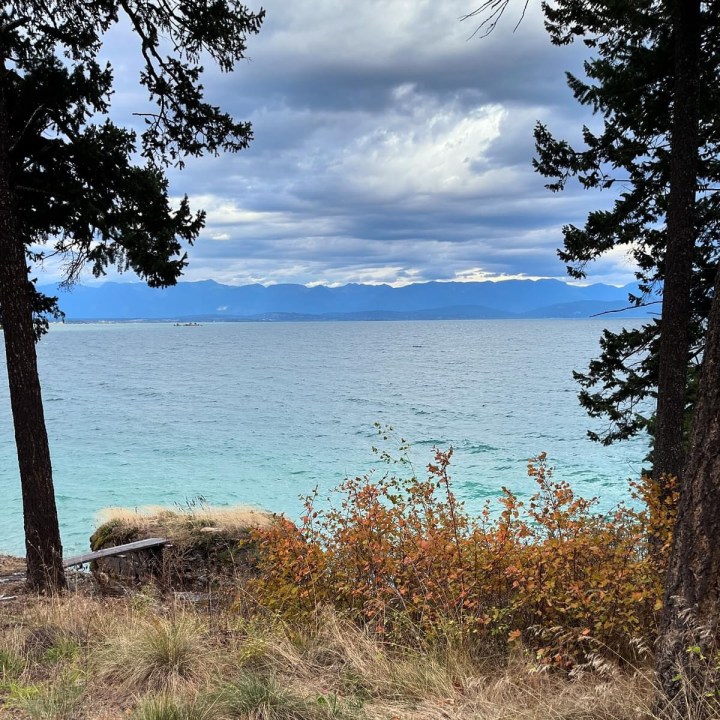
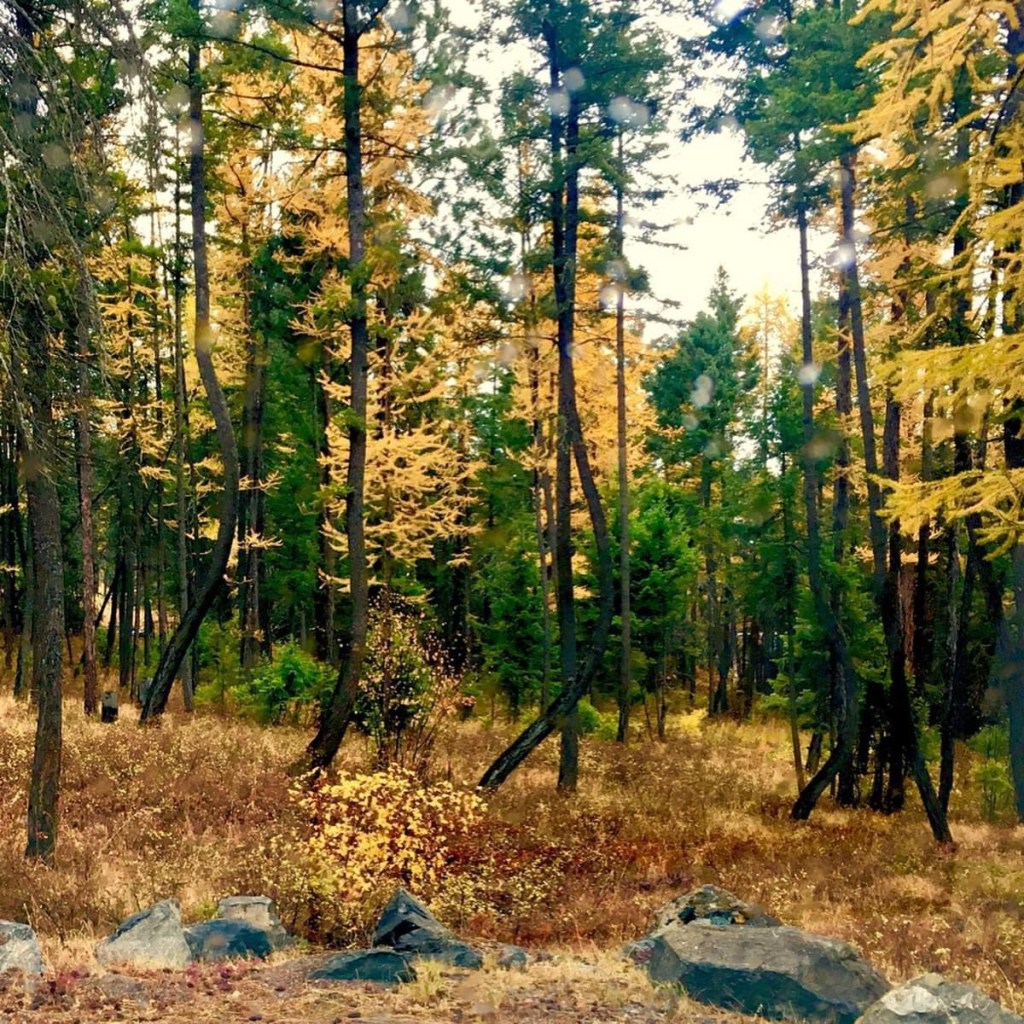
Another October has come and gone, our true Autumn with her blue cold off the mountains, her poignant visual aids for burning bright and letting go, and Buechner’s words echoing in my mind. Ahh, Buechner and his rooms. Unforgettable once you have heard them described, seen them. Buechner reminding me, again, that the time is ripe for looking back, urging me to enter that still room . . . His nudge takes me almost all the way back today.
Libby, Montana, the little logging town in the deep north woods just a stone’s throw from Canada. The duplex on Hwy 2 just after you round that big curve, pass the lumber mill on the right, and come into town. Sidewalks and schoolyards that belonged to us. Freedom to ride a bike all the way downtown to Bolyard’s Grocery where mom did the books some afternoons. Or walk to Bible Club at Mrs. Hyatt’s on Tuesdays after school with your sister, making it home just before dark. Freedom to Trick-or-Treat in the neighborhoods between our house and the schoolyards. We would be invited into the kitchen at one house to warm up with little cardboard cups of chili and Fritos, a warm donut or hot chocolate at another, homemade caramel apples or popcorn balls dropped in our bags at others. Everyone knew us by name or at least by our family name. Knew us well enough to give us a word of caution if we needed it.
Supper around the table each night, the seven of us, Daddy just home from his job as junior high principal, newspaper still waiting on his big chair. Full plates, stories, times tables, laughter, dish duty . . . warmed around the fire of family. We woke with the whistle from the mill and fell asleep to the idling of the logging trucks across the street at the café. More than one person has said to me after I’ve spoken or written about those days, “You can’t possibly believe it was that idyllic.”
We had sister fights and a bad grade, hard talks, awful bangs in school pictures, chapped legs at the tops of our winter boots, but I’ve always known that what we had was lifegiving, irreplaceable, that long, loving, safe childhood . . . a gift to be shared with gratitide. I went away to Bible college at seventeen, shocked by the painful stories shared around our evening dorm circle, yet oddly fascinated, thinking what remarkable testimonies these girls had. Mine seemed pale in comparison. I was young. It would be years before I understood how remarkable my experience was. My beloved Dr H upon reading the opening of my cabin book, awed that someone actually experienced the childhood moments I was describing with my grandparents around the table in this cabin, “You know what we had in our refrigerator growing up? Two bottles of vodka.”
My husband grew up in a different kind of home. Though he and his three brothers created the homes for their own beautiful families that they had longed for themselves, the scars remained. I know this firsthand, having loved this man of mine for more than fifty years. The rare times these brothers have been together over the years, their private conversations eventually turn to those painful times and that same unanswerable question. Why? And sometimes the oldest of these men, the two who remember all of it, drive past the old houses that once held them and weep for what might have been.
You ask different questions looking back, when you’ve had the home I had. Did I take it for granted? Appreciate it? Did I live worthy of it? Did I pass it on? As a writer and a teacher, I’ve been asked this question in different ways, many times. “What was his secret, your father’s, to raising the five of you as he did?” I would wonder what was so obviously unusual about us. Others would say, “It must give you a great confidence being Al’s daughter.” It did. We always had all of him and mom in every situation. The truth without judgment. As we grew older, I think we each knew deep down that this privilege came with a certain responsibility, this mantle left to us.
Years later, teaching To Kill a Mockingbird, I read these words aloud at the front of the class, and think of my Daddy. Discussing the mysterious Boo Radley next door, Scout asks Miss Maudie:
“You reckon he’s crazy?”

Miss Maudie shook her head. “If he’s not he should be by now. The things that happen to people we never really know. What happens in houses behind closed doors, what secrets...”

“Atticus don’t ever do anything to Jem and me in the house that he don’t do in the yard,” I said, feeling it my duty to defend my parent.

“Gracious child, I was raveling a thread, wasn’t even thinking about your father, but now that I am I’ll say this: Atticus Finch is the same in his house as he is on the public streets. How’d you like some fresh poundcake to take home?” I liked it very much.
Like Atticus, our father was the kind of man called on to do the hard things. He was the kind of principal who drove out to your house in the woods if your mom called, again, saying she couldn’t get you up for school. Having your principal at the door to drive you to school could put a healthy jolt of fear in you. “I’ll be waiting in the car.” He didn’t have to make the same trip twice. He was also the kind of principal you came back to see if you needed help with your tie for prom, or your parents, or the sheriff, or needed shoes for a job interview, or encouragement, his heavy hand on your shoulder letting you how much he believed in you.

It’s darkening now, the pines tall shadows out my window as I type at the top of the stairs, space heater at my feet. My guy naps. There’s that touch of loneliness, like homesickness, as evening falls. The time is ripe . . . yes, I have plenty of that once-coveted commodity now, time. Yet it ticks predictably onward. It is late Autumn for me, after all. I am reminded often of that in both big and little ways. I still want to get this last part right. Maybe there are better questions to ask than those guilt-tinged ones I must leave in His hands. Rather, did I always choose love? Did I always choose grace? Did I always choose forgiveness? It all still matters. I know that for sure.
It was late and dark when I got there after a long bus ride, but there were lights on in the house. My wife and daughter were there. They had waited supper for me. There was a fire in the woodstove, and the cat was asleep on his back in front of it, one paw in the air. There were problems at home for all of us . . . but there was nothing here just then except stillness, light, peace, and the love that had brought me back again . . . That was what I felt. And as I entered that room where they were present, it seemed to me that wherever these things are found in the world, they should not be a cause for guilt but treasured, sheltered from the darkness that threatens them. I thought of all such rooms everywhere—both rooms inside houses and rooms inside people—and how in a way they are like oases in the desert where green things can grow and there is refreshment and rest . . .

—from Chapter 2. Faith, A Room Called Remember
 Cabin Granny
Thank you, Becky, for a beautiful glimpse. O, the graces of God. Endless.
LikeLike
I remember saying to my Grandmother one time, after hearing someone’s dramatic testimony, “I wish that I had a testimony like that.” She said, “Oh, honey, no you don’t.” I didn’t truly understand then, although I thought that I did. I do now, having heard many more of them and I’m thankful. I love reading your words and thinking about your childhood. Childhood is shorter now; they grow up too fast. I’m glad that we didn’t.
LikeLike
Thank you for what you have written; it is wonderful and thoughtful and filled with love.
LikeLike
We all have a background story don’t we? Last summer a visiting minister to our seasonal church community talked about our “stories”. That idea sort of took hold and was carried on through some bible studies and conversations. So now it’s easy for me to ask “What’s your story?” While watching some of the election results last night I read the last two years of your blog. I wanted to know your story and I also wondered how your husband is doing. I’m 84, a fiber artist/craftsperson and think about what I’m going to create at my loom every single day – even though I don’t get to do that every day. That’s my present story and I’m so thankful that I’m living my story every day. God Bless you and your family. Hugs and Blessings. JWS
LikeLiked by 1 person
Oh my goodness! thank you for reading! Being an artist sounds like the best job of all, and weaving, fiber artist… intrigued. Yes, we all have a story. I’m working at getting mine about the years in this cabin completed. My guy is doing pretty well, a few ups and downs. Thank you. It was a hard surgery. I have been unable to see the names of Commenters since I downloaded Jetpack on my phone so I could respond and write on the Blog on my phone when traveling last year. So all responses are Anonymous. Very frustrating! I wish I could figure out how to change that. Blessings to you too.
LikeLike
With quietness of heart, it is always good to visit that room of remembrance! And I feel at the age of 73, the time is ripe! Always enjoy getting to read your lovely writings and how they just lead me to pondering. Please keep posting! Linda Tietjen
LikeLiked by 1 person
Thank you Linda for your sweet words💙
LikeLike